Categories
Microsoft365 Minecraft:EE

Reflections On Being A Life Long Learner & The Top THREE Lessons I Learnt

Recently, I have been reflecting on what it means to be a “Life Long Learner” in light of the ongoing research indicating that the K-12 students of today will likely have 5 or more distinct careers during their time in the workforce, meaning re-training is an inevitability.

Related to this topic, I am actually going to be speaking on May 7th 2019 as part of the Microsoft #FutureOfWork Event (registration here) on the topic of Game Based Learning principles, something that many organisations are starting to adopt for staff training.

Speaker Organic Post - Join me at the Microsoft FutureOfWork Summit.jpg
Register to attend for free here

As evidence of this, the following LinkedIn post from Chee Kiat OH shows staff learning about Robotic Process Automation via Minecraft:Education Edition:

LinkedIn.PNG

Alice Bonasio, writing for CIO.com earlier this week commented:

The concept that there are clear milestones and an eventual finishing line to learning was never ideal, but it is even more woefully inadequate in a technology-enabled world. To thrive in volatile environments, we must embrace life-long learning. (emphasis mine)

Cut To The Chase: What Are The Top Three?

I’m going to expand on these in more detail further down in the post, but for those impatient to know what my top three reflections were on being a Life Long Learner here they are:

  • It’s critical – all sectors are changing too fast for individuals to NOT be learning all the time.

As I quoted in this blog post on reflections of tomorrow’s teachers,

In this age of accelerations, such a slow process is no longer good enough and inevitably leads to a widening gap between what students need to learn and what teachers teach. When fast gets really fast, being slow to adapt makes us really slow.

Andreas Schleicher

  • It requires determination – individuals are always short of time, energy and motivation

I admire anyone that works full time in a demanding job and still finds time to complete formal study on top of that. The good news is that with MOOCs and other online training options like edX and LinkedIn Learning it’s becoming ever more flexible to wrap training around busy schedules.

  • It’s rewarding – learning new things has an inherent thrill to it, just ask any student that has grasped a new concept or skill for the first time.

My learning journey has included being a K-12 student, both undergraduate and post-graduate University student, re-training into a new career with a secondary teaching diploma and now finally continuous on-the-job learning. Through this journey, I’ve covered just about every type of learning there is. Nevertheless, it’s still exciting when I grasp new knowledge or skills and then proceed to apply it for the first time in my daily life or job.

So where and how have I been learning?

Minecraft:EE Build Challenge – Solar Model

I was in Singapore last week as part of the APAC Education Partner Summit 2019 and I was asked to present on the topic of “Making Education Transformation Real in K-12” and you can see my slides below (note: I was deliberately using Office365 PowerPoint with support for 3D models to animate my Minecraft:EE and Solar System Models – SlideShare does not support this animation):

After talking about Game Based Learning I ended up showing a Build Challenge inside of Minecraft:EE that I had worked on that morning (around 3am actually, since I work up very early with time zone differences!). Here’s the link to the build challenge that had a reasonably simple objective:

Objective

The Sun is 286 times the size of the smallest planet in our solar system, Mercury. If Mercury were the size of one Minecraft block, try to build a scale model of Mercury and the rest of the planets. You may have to round up or down to the correct number of blocks. To get you started, we’ve created a world with a Minecraft block scale sun!

To complete this, I ended up needing to do quite a bit of learning and also develop an iterative approach to knowledge building. I’m going to describe this for you but if you want to access my finished files you can download them from here (they include the Minecraft world, my Excel spreadsheet, and my MakeCode coding files).

The first challenge was finding out the basic facts around the Solar System – planet names, colours, sizes, relative distances from each other and the sun. I ended up compiling this into an Excel Spreadsheet and used a basic formula to convert 1km into 1 block inside Minecraft:EE

Excel

With this in mind, I was able to then create some sample code to build out each planet to scale:

Solar 3

This would be faster than building each planet by hand inside of Minecraft and the intial results were pleasing enough – here are spheres representing Earth (blue, small) and Mars (red and partially built):

Solar 4

So I now knew I could build each planet individually but the question was how to make this a scale model with the accurate distances between each planet? I decided to build each planet sequentially and place the starting position relative to my location – so you can see that Mercury would be built first, 58 blocks away from my starting position against the Sun, representing 58million kilometers away. This was followed by Venus (pale yellow) 108 blocks away, representing 108million km from the sun and so forth. Here’s two views of the same code, one in MakeCode.com blocks and the other in JavaScript:

When I ran my code this executed beautifully:

Solar 7

However, because of the huge scale of the universe, I quickly realised that to travel 5,946 blocks in Minecraft to get to Pluto (representing 5,945,900,000km from the sun) would take a LONG time.

KEY LEARNING: the scale of the universe is ginormous! This was reinforced to me through trying to create a scale model inside Minecraft! Whilst I built this using code, I never got to see those planets as it would take forever to run to them inside the game (unless I teleported).

The other learning was that to build a scale model of Jupiter inside of Minecraft:EE as a sphere with a diameter of 143 blocks also takes a LONG time.

Instead, I decided to iterate my code in two important ways:

  1. So that I could at least see each of my planets I set an arbitrary distance between each planet of 50 blocks inside Minecraft. I also set each planet to be 10 relative blocks above the previous one so it would go up in a nice consistent line.
  2. I replaced the “sphere” command in Minecraft with a “circle” command meaning it would be far faster to build, as it would only be a disk the appropriate size, and not a sphere.

Here was my new code alongside each other:

Solar 8

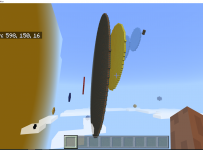
When I ran the “solarCircle” code it worked wonderfully,quickly building out scale circles of each planet but near enough so I could visualize them together:

In the first picture on the left you can see the planets scaling out nicely, before being hidden by the massive size of Jupiter. Navigating around that to the right, you can see in the second picture the remaining planets.

Through this exercise, done in my hotel room before I presented to group of ~70 partners, I learnt many things about the solar system! It also helped me understand different way that data can be represented and how by using computational thinking and coding I was able to break down a bigger problem of building a scale model into smaller steps that I could replicate and modify individually.

If I linked this back to my three key reflections on Life Long Learning:

  1. It’s critical
    1. For my presentation I really wanted to have an authentic example that the audience could relate to and show a real use of Game Based Learning.
  2. It requires determination
    1. I admit I got a bit annoyed during this and thought about quitting and using a different example where I didn’t have to prepare all the data, but I persevered and chose a Growth Mindset instead.
  3. It’s rewarding
    1. I got a genuine kick out of this when my final version of code worked flawlessly and gave me a great view of the scale of the planets relative to each other. It has also given me another working example I can use in different demonstrations with educators around the region.

LinkedIn Learning – Azure Technical Training

Badge LinkedIn LearningThe second example of life long learning has taken place over the course of this week as I completed some mandatory technical training around Azure services for my job with Microsoft. One of these modules was around Microsoft Azure Artificial Intelligence Strategy and Solutions (see the badge on the left that I got when completing this learning).

In many ways, the learning via LinkedIn includes elements of Game Based Learning Theory – there are points that can be gained for completing each section and badges that can be unlocked for finishing an entire module. These can then be shared and celebrated on various social media platforms (I published mine on my LinkedIn wall).

Through completing around five hours of training in this space I learnt a lot and also had much of my wider ideas clarified or affirmed. Again, if I link it back to my three reflections on Life Long Learning:

  1. It’s critical
    1. If I want to be able to have relevant conversations with customers in the Education Sector, I need to be across both the trends happening in the sector but also the technology offerings and solutions that Microsoft have. I literally could not keep my job if I was not continuing to learn as our technologies evolve.
  2. It requires determination
    1. With hundreds of emails a week coming and going, customer presentations, internal meetings there are always reasons to delay or ignore critical training. I needed to prioritize this and commit to being a Life Long Learner or else it simply would not have happened.
  3. It’s rewarding
    1. Just like in the Minecraft:EE example above, I got a genuine thrill when I passed the assessment related to each module and was pleasantly surprised when I realized I knew more than I thought I did in some areas. Additionally, it’s equipped me to have deeper conversations with my customers in a way that I would not have been able to before.

Final Thoughts:

It can sometimes be trite to talk about Life Long Learning, however I’m more convinced than ever that we all need to be adopting this, along with a Growth Mindset when it comes to our workplaces. As someone that has had three distinct phases in my professional working life already I am in many ways an accurate reflection of the trends the research is predicting. If you’re interested in more research, check out the Class of 2030 data published here.

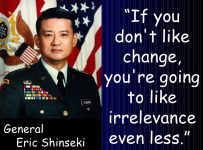
Having worked in a range of different sectors, including as a secondary school teacher, I’ve been both inspired and dismayed by my colleagues approaches to life long learning. The best continually challenge themselves to both reinvent and reimagine how they complete their jobs and deliver amazing results. Others, sadly, “stick to what they know and what they’ve always done” and I believe that it will be increasingly difficult to be successful in the workplace both now and in the future when a Growth Mindset is not adopted to power life long learning. It seems appropriate to finish with the words of General Eric Shinseki from the US Armed Forces:

Eric Shinseki.jpg

Thoughts On Leadership & The Changing Workforce

A family construction project is a great exercise in differing leadership styles!

I’ve been having a few thoughts on different leadership styles recently, after sharing conversations with family, friends and colleagues over the last month or so.  The main stream media in New Zealand continues to profile opinion articles on US President Donald Trump‘s leadership style, often contrasting it with New Zealand’s recently elected Prime Minister Jacinda Ardern and her own brand of ‘relentlessly positive’ leadership style.

Millennials-at-Work
Infographic on the changing face of the workforce. Credit

Over the weekend we set up some new bunk beds for our two youngest children and it was fascinating to see the dynamics at work: who wanted to lead the project, who was happy contributing and who wanted to opt out entirely! I took a time lapse of the project (above) and you can see our kids variously coming and going with only our second oldest participating for the entire duration of the activity. This highlighted to me the increasing need to be flexible in leadership and to be comfortable in relinquishing control over activities to ensure maximum engagement from ‘the workers.’

I am very confident that if it had come down to just my wife and I doing it all, we would have completed it far quicker than allowing the kids to help out and contribute and we would likely have not experienced the elevated levels of frustration/stress that occurred a few times during the project. However, this would have prevented any sense of ownership and pride for our kids who were thrilled to be able to contribute to the construction of ‘their’ bunk beds.

To that end, I see the same challenges to leadership in the workplace and the continuing need to be flexible and responsive in terms of maximizing the output of team members. Over the last year, I’ve worked and conversed with a growing number of workmates who self-identify as ‘millennials.’ It has been fascinating to see their (often quite vocal) expectations of what the workplace should look like, how opportunities should present themselves and also how they prefer to approach their assigned work and responsibilities.  I don’t think there is necessarily anything right or wrong, better or worse in these attitudes, but they are definitely going to be something for leaders to need to take into account.  I suspect those leaders that adapt and show a willingness to be flexible to include the different styles of their teams (across all age and experience brackets) will likely succeed the best.

Ultimately, however, it’s probably similar to parenting. There are some issues that are simply not worth dying in a ditch over, whereas in my experience at least, both parents and children generally find that ‘choice within parameters’ works best by providing the necessary elements of autonomy whilst still providing the security of boundaries to safely operate within. In the workplace, those boundaries are often how we are measured in terms of performance or KPI and provide the broad-brush strokes of our objectives and outcomes.

Over the years, I’ve managed people who very much preferred to ‘paint by numbers’ and have almost step-by-step guides for how to complete their work. Consequently, they showed almost no initiative when it came to problem solving and resolving issues they had not confronted before. I see this is changing, highlighted by the preferences of millennials, and is perhaps also being driven by a renewed focus on problem solving in the New Zealand education system.

In late November 2017 the Ministry of Education published a summary showing that in PISA’s OECD 2015 study New Zealand students excelled at collaborative problem solving:

Historically considered soft skills, these are more and more being seen as essential by employers who are competing in a globally connected and technology savvy world… Students with collaborative problem solving skills and competencies will be well placed to take advantage of the many opportunities they will be faced with in an evolving work environment, and an increasingly global digital world.

Reading the more in-depth review of the PISA testing is instructive for both New Zealand educational and business leaders as well, because it is going to be precisely these students that will be entering the workforce over the coming years. Without doubt, this is going to challenge the leadership styles of many of those in existing leadership roles in business.

I attended an event in Auckland towards the end of 2017 where a number of self-described futurists outlined their vision of the future in terms of education and the workplace. One of them, Frances Valintine, talked about the mass of students coming into high schools now who have only ever experienced ‘modern learning environments’ and largely ‘self-directed learning.’ She posed the question how will secondary schools, with their more traditional approach to teaching and assessment, cope with these more autonomous students.

10-leadership-tips-12-728.jpg
One of my favourite quotes.

I suspect the same question could be asked of the workplace if not now, then certainly over the coming three to five years. In many ways, social media has empowered everyone to ‘have a voice’ and freely express their opinions and views, irrespective of how well thought out they may be. I see elements of that emboldened approach to speak out in the workplace as well, challenging traditional established hierarchies. Again, some workplaces will maintain the status quo and expect young graduates to ‘be quiet and learn the ropes’ before actively contributing, however I think in the increasingly competitive marketplace focused on attracting top talent that view will not last.

In my current role I do not have any direct reports, something that I have not experienced for well over a decade. It has provided me with an opportunity to observe the leadership around me and also think more deeply about what it means to be a leader without a title. That’s probably a topic for another blog post, however in an era where there is increasing talk about ‘influencers’ (social, or otherwise), one thing is clear: the requirements to be a successful leader are changing. As General Eric Shinseki so memorably inferred, if leaders are not open to change then they will ultimately become irrelevant.