One of the great features of Microsoft Teams is the ability to join another organisation’s Teams Tenant as a Guest – I blogged about this when it was first released. However, if you’re anything like me, you’re often invited as a Guest into many tenants. For example – this week I’ve been delivering professional development in a school and to assist in demo’ing, they added me as a Guest to their Teams tenant.
Another common scenario is cross-school collaboration (think Communities of Learning in an NZ context). This is great to facilitate the easy sharing of resources and communication, however at some point you may want to leave some of these organisations. At first glance, this is not quite as obvious as it might seem.
How To Leave A Team:
This step is pretty straight forward – select the ellipses (…) to the right of the team name and then choose “Leave the Team”

While this is easy to leave the Team, you’re still a member of the host tenant courtesy of how Azure B2B works. Therefore, the organisation still appears in your list of tenants in Teams you could switch to:

Leaving An Organisation As A Guest User:
I admit I was a bit stuck on how to resolve this, so after posting in an internal Yammer group I was directed to this helpful guide: Leaving An Organisation As a Guest User
It’s a pretty simple five step process in the end:
To leave an organization, as a user signed in to the Access Panel, do the following:
- If you’re not already signed in to the organization that you want to leave, select your name in the upper-right corner, and click the organization you want to leave.
- In the upper-right corner, select your name.
- Next to Organizations, select the settings icon (gear).
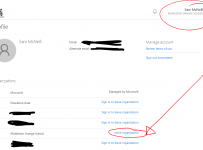
- Under Organizations, find the organization that you want to leave, and select Leave organization.
- When asked to confirm, select Leave.
For me, this looked as follows after signing into the My Apps page:

After clicking the cog above, I can then simply choose to leave the organisation:

As the Docs point out, this performs a soft delete so the Tenant Administrator can restore this user for up to 30 days if requested. You even get a groovy branded email advising you’ve left the organisation:

My Point of View:
Guest access across Tenants allows schools to seamlessly add/remove users from other organisations in an easy and secure way. That a Guest can “self-manage” their access to these organisations in terms of determining when they leave is even better.
This is a significant aid towards collaboration across schools and ensuring best practice can be seamlessly shared with the right people, at the right time. Hopefully this tip is useful for people that end up as Guests in lots of tenants!


I am always keen to discuss what I’ve written and hear your ideas so leave a reply here…