Back in late 2022 I got my first custom built bikepacking rig, based around a Soma Wolverine frame and a Rohloff Speedhub – you can read the full breakdown of that bike here. Unfortunately, that bike came to a sticky end after my abortive Ride 35 adventure on the East Coast of New Zealand ended up in Taupo. You can read the full adventure here, and the specific demise of the bike here. With that bike mostly damaged, I decided to replace it with a Salsa Fargo and recycle some of the key parts.
It’s always really tough considering what new bike frame to build a new bikepacking rig around when you can’t get a chance to ride them first. I did a heap of research and used a number of different Generative AI tools (Grok, Copilot) trying to compared the geometry and riding style of my Soma Wolverine with the Salsa Fargo. It’s pretty tough getting an accurate idea, but in the end I liked what I was reading about the Salsa Fargo and chose that. Whilst originally designed for dropbar configurations, I was pretty keen to keep the Surly Moloko handlebars that I really liked from the Wolverine and this would make it easier to keep the Rohloff drivetrain system as well. With a steel frame and a carbon fork, it’s a super versatile bike:
Fargo is our versatile steel or titanium bike with drop bars and mountain bike features. It’s designed for adventures ranging from rugged gravel rides to long, self-supported bikepacking trips.
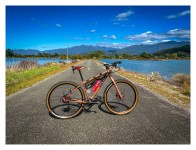
Here is the finished bike out at Waitapu Wharf just outside of Takaka in Golden Bay:
Despite the damage to my Wolverine, I was able to recycle a fair number of parts from that bike and so similar to my original post on the Wolverine, I’m going to break down a bit of the bike build:
Key Components
Some other features of the custom build that I was super happy with on the finished product include:
I was able to recycle this from the original Wolverine and combined it with a new Gates Carbon Belt Drive. Over thousands of kilometres on the old bike, the Rohloff and Gates combination never let me down and I’m looking forward to many more adventures on the new Salsa Fargo.
I kept this from the old bike too, but with a few new scuffs on it from the wear and tear of three and half years on the Wolverine and a fair knock when it came off the roof of the car during the accident. Good seat, largely happy with it.
I liked the Son Dynamo on the Wolverine but I was very keen to get it with a thru axle configuration for the new bike, so I replaced it with the same anodized red colour but a thru axle configuration. Same great power generation, easier wheel alignment.
I replaced the Son Edelux II on the old Wolverine with the KLite front and rear light combination. I’d heard about this from a few bikepacking magazines and people were very complimentary of the lighting and I was keen to add a rear dynamo-powered light as well so this was a great combination. I opted for the Adventure Configuration which would prioritise a wide spread of light at lower speeds, with an “auto high beam” that would shine further ahead when the bike exceeded 20kph – clever stuff. KLite also has a configuration that gives you a charging option as well but I chose not to get this. I had previously had the Sinewave Cycles Reactor (red anodized) – USB charging port in stem on the Wolverine, but honestly rarely used it, so decided to save some money and just do the light combination.
In mid 2025 I had replaced the red pedals I originally had on the Wolverine with the Favero Assioma Pro MX power meter pedals. They’re great, highly recommend.
I retained this – great handlebar, lots of hand positions, really like it. I did toy with some dropbar configurations for the Salsa Fargo like the Salsa Woodchipper Handlebar – Salsa Cycles, as the bike is originally intended to be a drop bar configuration. Perhaps I’ll give that a go at some point (will need some thinking in how to handle the Rohloff gear switcher at the handlebars)
At the time of the Wolverine demise, I was running G-ONE R PRO Line | Schwalbe in 45mm configuration. They were super fast rolling, but lacked grip in some of the muddier stuff. I opted for the rebuild to go back to the original gravel tires I got on the Wolverine, the fantastic Panaracer GravelKing Semi Knobbly with tubeless configuration. I chose the 50mm which seem really wide compared to 43mm or even 45mm I’ve run in the past, but they’re wide and ride great.
Here are some photos of the bike at Totaranui Beach after an 85km ride including a 300m climb to get to the remote bay across some great gravel:
I want to give a shout out to the great crew at Goat Cycles who patiently worked with me as I figured out the specs in the transition from the Soma Wolverine to the Salsa Fargo. They’ve done a great job building it for me and I’m super happy, anticipating thousands of kilometres riding on this new rig!
My pride and joy – the Soma Wolverine custom build
Update 7th November 2022
I completed my first overnight bikepacking trip with this bike over the weekend. It was a heap of fun and I’ve written a review, included the route and some photos of the trip and gear I took if you’re interested here: 24hr Bikepacking Adventure – November 2022 – SamuelMcNeill.com
Given the interest in my bike posts, I am going to share a new one today about my first custom built bike – a Soma Wolverine v4 Type B frame which the team at Soma describe as an “Adventure/MonsterCross”. Going on they say:
The original inspiration for the Wolverine was “monster cross”, but it is seriously so much more. Its geometry is stable enough for off road touring, but sporty enough for all-around adventure and gravel riding. With its sliding dropouts, you can run single-speed, derailleur gearing or hub gearing. With a split seatstay, it is compatible with the Gates Carbon Belt Drive.
And in that last sentence is the clue to why I chose this frame to start the build. My Riese & Mueller eBikes are both using the Gates Carbon Belt Drive system and I’ve found that this is has been a super low maintenance alternative to a traditional chain drive. In my eBike post I opined that whilst I was happy with the Enviolo internal gear hub, I’d really love to get a Rohloff:
On the upside, the Enviolo is virtually maintenance free and is a masterclass in engineering (if I had my time again, I’d choose the Rohloff e14 Speedhub for a wider gear range but still internally housed)
So when it came to building this custom bike I was going to start with the drivetrain first:
A Rohloff Speedhub
A Gates Carbon Belt
Naturally this would narrow the options of a frame as I would require that split seatstay to be able to insert the belt – enter the Soma Wolverine v4 Type B
A couple of local bike shops recommended this frame for what I was wanting to do in terms of building a bike that would be a “go anywhere, do anything” type of bike but unfortunately the supply was non-existent in New Zealand. After an online hunt I discovered Omafiets in Sydney who responded that they had my size in stock and were happy to ship it as is. Given how helpful they were I started an email dialogue and then a phone call followed to dial in precisely what I was wanting.
I can not speak highly enough of the team at Omafiets – they were super engaged, happy to answer a million questions I had, seemed to “get” my vision for what I wanted, and totally humoured me on the finer details I wanted for this bike. On an early phone call they said “we don’t mind if there is another 50 emails back and forth whilst you get the exact spec you want” …. I laughed saying it would not take that, but in the end it must have been close and the team there were super patient and happy to answer any questions I had.
The final build was stunning – even if I do say so (photos below were taken by the team at Omafiets after the build was completed to let me see how beautiful it looked):
I live in New Zealand, so after the build was completed, Omafiets boxed it up and my sister brought the bike over for me when returning for our parents’ 50th Wedding Anniversary celebration (shoutout to Air New Zealand taking bike boxes as extra baggage for $70! Definitely cheaper than couriering it here)
Key Components
Some other features of the custom build that I was super happy with on the finished product include:
Alongside the Gates Carbon Belt, this was the foundation of the bike build and I knew I didn’t want the plain black hub. Getting it in red started somewhat of a trend for other speciality components on the bike….
Once broken in, these saddles are meant to be super comfortable. I can attest to this from my Pashley Sovereign bike that had a Brooks and I loved it. They require a little extra care, but you get the benefit of it.
I’d read a lot about the pros and cons of a dynamo hub and whilst I doubt I’ll do too much multiday adventuring where I would not be able to get access to a power plug at some point, I wanted to add something in on the off chance. Additionally, from my eBike experiences I loved having a power source for a front light without ever having to think about charging batteries for the light.
I was originally thinking about an alternative front dynamo light but this was where working closely with Omafiets again paid off – their team suggested the Edelux since it came in matching red and really started to make the color scheme pop!
I had seen other USB charging ports for bikes but most were quite ugly with cables visible. I loved how this one was inserted into the top of the stem and was very discreet. The fact in came in shiny red really had me at first sight! I’ve tested this and even at low speeds of 10-20kph it accepts plenty of charge from the dynamo and charges devices quickly.
I had not initially thought about custom pedal colours but as more splashes of red were making their way into the build I reached out to Omafiets and they sourced and recommended these ones. I felt it could be a bit indulgent, but so glad I went with it and many people comment on how great they look.
This is a pretty unusual looking bar but was again recommended to me for a custom bike build, offering various handgrips as well as mounting points for bags and cameras. Having ridden the bike on one 100km ride so far, I can definitely attest to the comfort of the various positions on this handlebar
I am not a tyre specialist at all, but the team at Omafiets guided me expertly towards these based on my intended riding, providing a combination of good grip with high rolling speed for mixed terrain riding. I’ve been surprised by the compliments from others “in the know” about the tyre choice – seems like Omafiets know their stuff!
The rest of the componentry I largely took the expert advice from Omafiets (and glad I did) who helped me settle on a very cool, very custom, one off bike for me.
Some Photos From The Road
The bike is pretty new still and I’ve done a nudge over 300km on it, with one 100km ride so far loaded up with about 80% of my camping kit:
I am planning to head away on my first overnight bikepacking trip with a friend this weekend actually so will update this blog post with some additional details (UPDATE: here’s the review from the weekend – 24hr Bikepacking Adventure – November 2022 – SamuelMcNeill.com).
Final Thoughts
I love this bike, it’s lively and fun to ride, can go long distances at a steady pace, climbs well, is stable on descents and looks great of course (beauty being in the eye of the beholder of course!). I have some multi day bikepacking rides lined up for this summer and will know more about it’s overall performance then. One aspect I was a bit nervous about was pulling out the back wheel in the event of a puncture. Even though I’m running tubeless it will need to be done at some point and my experience of removing the Enviolo and belt on my eBike was a bit of a mission,
Fortunately, I have a friend who is a bike mechanic and volunteers additionally at Recycle A Dunger, a community project in the heart of the city where they provide free bike maintenance advice/repairs and try to upgrade donated bikes for others to buy at affordable prices. I popped in and saw him this week at RAD and he showed me how easy it was to get off the rear wheel – even easier than my traditional derailleur bikes!
Ultimately, I wrote this post for others that might be thinking about custom builds, want to know more about the Soma Wolverine (I did a heap of searching and there were not that many reviews on it) or simply just love bikes as much as I do! Hope this was interesting!
Any sort of bike, really, and I find riding them good fun, good for my physical and mental health and good for seeing both new places and viewing familiar ones from a new perspective. I also really like thinking about new bikes that I might one day get and I’m in the thick of that at the moment in terms of considering my first ever custom build of a “do it all” adventure / light touring non-electric bike.
One of the things I’m needing to think through is the gearing of the new bike to ensure there are enough low gears to crawl up some of the massive climbs in New Zealand with camping gear and me included! I’m currently considering the Soma Wolverine v4 Type B frame that would look a little like this, but I’d not go for the drop bars:
The reason I’d go for the Type B frame is I really want to use a Rohloff Speedhub internal gear hub with a Gates carbon belt drive. I already have some experience with internal gear hubs and belt drives on my first eBike – read about this here. What I’m less familiar with is the gearing ratios I’d need and how to translate these from my existing derailleur / cassette drive trains into the 14 geared Speedhub.
With this configuration you can see the eMTB has much lower gearing and much higher jumps between the lowest gears (36T to 42T to 52T). So whilst it doesn’t have the same top end speed as a roadbike (as you’d expect) it should get you up steep climbs with far less effort.
When I’m not outside on the road I often ride Zwift on my Wahoo Kickr Bike in the garage:
There are many cool things about this training bike but two quite unique features:
It can accurately simulate gradients, both climbs and descents making for very realistic riding. When riding virtual worlds in Zwift or riding courses from my Garmin Edge 530, the bike automatically goes up and down based on the gradient on the ride – cool!
You can configure any group set you have on your bikes – in my case Shimano and SRAM. This is because there is no physical cassette on the Kickr Bike, but instead a weighted flywheel and belt drive will simulate the different gearing configurations you may choose. Up until now, I’ve always just mirrored the Shimano gearing on my Cannondale Synapse, but today I did something a bit different.
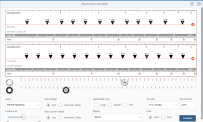
Comparing Rohloff Speedhub with SRAM 10/52 Eagle Cassette
The really clever thing about the Bicycle Gear Calculator website is that it allows you to compare two different hubs, meaning I could take the known configuration of my eMTB and compare it against a prospective Rohloff Speedhub I might get in the future with the Soma Wolverine.
The Rohloff has 14 evenly indexed gears, and because there is 540% gear range you can see that the lowest and highest gears are ever so slightly lower and higher than the SRAM configuration – incredible! The cool thing about the Bicycle Gear Calculator website is that you can slide the Chain Ring and Cog up and down to immediately see the impact of different tooth configurations if you need lower/higher gearing ratios.
So, I’d been able to establish in theory that a Rohloff Speedhub with a 46/20 configuration would likely be geared pretty similarly to my eMTB which, believe me, absolutely flies up hills – thanks to it’s amazing motor! What I could not easily test is what it would be like riding a bike like that up real hill climbs without the motor assist. Then I had a brainwave.
Wahoo Kickr Bike + Garmin Course Routing = (Virtual) World Test
I remembered that you could change the gear ratios on the Wahoo Kickr bike and I wondered if I could accurately replicate the SRAM set up on my eMTB. To this point, I’d always run the Shimano 2 by 11 that my Cannondale was using which was 2 Chain Rings (34/50T) and 11 gear cassette (11/32T):
There was no SRAM Eagle cassette configuration in the Wahoo Kickr app, so I was going to need to rely on the custom configuration setting which meant I was going to need to find the actual number of teeth on each cog in the cassette – something I was able to track down here:
The jump from the 42t to the 50t cog equates to a 19 per cent jump, while shifting from the 42t to the 52t cog on the latest cassette increases this to a 23.8 per cent jump. Lower down the block (from the 10-42t cogs), the steps remain the same (10, 12, 14, 16, 18, 21, 24, 28, 32, 36, 42, 52t).
Equipped with this information, I was able to recreate my SRAM eMTB gearing by manually entering in each cog size:
At this point, I was starting to feel pretty pleased with myself but now I needed a realistic course for riding the new gear configuration on my Wahoo Kickr Bike. I’d recently completed “The Three Sisters” on Zwift that has 3 of the 4 largest climbs in Watopia (898m elevation over 48.5km) and had done this on my standard Shimano configuration:
Whilst repeating this would have given me a better understanding of relative effort between the two gearing systems, I really wanted something a bit more real world, something that might simulate a ride I’d do if out bikepacking. I decided to create a route near me that would start in Diamond Harbour, bike around to Purau before setting off up the first climb of 434m and down into Port Levy, before climbing again, this time 671m exiting Port Levy on the way to Little River.
A total climb of 1131m in a little over 30km would definitely be a good test of the gearing setup, with the first climb being 5.06km and an average gradient of 9% and the second 7.5km with an average gradient of 8% according to Garmin’s ClimbPro calculations. I’m not the lightest rider by any stretch and on my road bike, in real life, that would be something that would be a little daunting and I’d definitely know a hard ride in the saddle was looming! On my eMTB with boost assistance it would be fine – the big unknown was how it would feel with my eMTB SRAM gearing ratios and my legs providing all the power!
In the end, honestly it was pretty easy:
You can safely ignore the downhill speeds because Garmin doesn’t account for corners or sanity, simply power + decline = speed!
So, it was not fast going up by any stretch, and I sat mostly in gears 1-5 for the climbs. Even though the averages were 8% and 9% respectively, these ranged from 6% to 20% in places. I tried to imagine whether I could have done these climbs on a bike with camping gear and I concluded I likely could have. My max heart rate was only 164bpm with an average of 141bpm which was pretty low given the 1100 total elevation and shows just how much difference the gear ratios made.
Similarly, a max power output of 328w is quite low with average of 196w shows it was hardly a strenuous ride. By comparison, here’s the Three Sisters data (less steep and less total elevation but it did have one sting in the tail going up to the Radio Tower):
Clearly, both higher max/average for power and heart rate showing it was a much harder ride than what I did today with the Garmin route and the SRAM gearing on the Wahoo Kickr Bike.
Final Thoughts
I was super pleased to realise I could virtually simulate any gearing combination on my Wahoo Kickr Bike allowing me to test various things before ever considering purchasing them. It was also interesting to learn via the Bicycle Gear Calculator that a 14 speed Rohloff Speedhub has almost identical top and bottom gear ratios to the 12 speed SRAM Eagle gearing on my eMTB if I used a 46/20 configuration with the Rohloff. Knowing I could tweak that further to go even lower if needed was reassuring, and Gates has a useful calculator on their website that allows you determine what length carbon belt you’d need to match your chain ring and cog combination.
So whilst I’m no closer to buying my dream custom build bike, I do feel like I’ve at least ridden it virtually up 1100m of climbing on local hills and would have a reasonable sense of how it would feel on those climbs. Of course, the Wahoo Kickr doesn’t take into consideration the weight of the bike (and any gear strapped to it) when determining the resistance on the inclines, but it does take my weight from Garmin to make it realistic in terms of effort/power and resultant speed up the hills.
Riding with super low gearing today did mean it was a slow ride up big hills, especially compared to my road bike, but sometimes that’s ok. Riding is meant to have different experiences and being able to ride consecutive days with big elevation climbs is important for longer, multi-day rides.
Lastly, this is all new to me – if you’ve got experience and knowledge on gearing ratios and have spotted errors in how I’ve calculated this, please do feel free to drop a note in the comments below to help me learn.
This blog post has proven to be more popular than I anticipated at the time of writing (back in January 2021), with a lot of views and comments below too. I thought I’d add a quick update on things since I wrote it. Firstly, I’ve bought another Riese & Muller eBike – this time a MultiCharger Mixte for my wife. She wanted a step through frame so she could more easily wear a skirt/dress on her eBike and she’s loving it. This is the evening we picked it up:
She opted for the seat kit on the back so the kids could sit on it (doesn’t happen too often as they don’t think it’s very cool!), but has huge carrying capacity, plus the updated rack on the front is very helpful with more space and heavier carrying capacity compared to the SuperCharger 2 we originally got. This comes with a single 750w battery, Enviolo internal gear hub and Gates carbon belt drive (although is not a high speed motor).
I am continuing to track month on month usage of the car, the SuperCharger 2 and now have added the MultiCharger Mixte. I am pleased how we have managed to go from two cars to one, and grow the eBike usage considerably.
Lastly, I’ve finally got myself a bike with a Rohloff hub and it’s brilliant. I talk below towards the end of the original post about my preference to have had a Rohloff on the SuperCharger 2 to maximise the value of the HighSpeed Bosch motor, and at last I have one – but this time on a non-electric gravel bike!
Riding it up and around the hills of my local townPrimed and ready to come home – you can see the red Rohloff hub in the rear, matched with a red Son dynamo in the front hub powering the red Son Edelux light and USB charger in the stemThe red Rohloff hub in all its glory, paired with a Gates carbon belt drive
With that update done, back to the original post:
Introduction:
I’ve been meaning to write this for a while and yet have been short of time. Now, on 2nd January 2021 holidaying by the beach, I thought it might be a good chance to write this down. It could get a little long, so I’ve broken it into sections so you can skip around to what interests you most:
I’ve always loved riding bikes and from a young age was using a bike to ride to school. I have one clear childhood memory from around age 7yrs or so, when I was allowed to ride my bike the 500m or so my local primary school for the first time. I was so used to walking home after school that’s precisely what I did, only realising I’d left my precious bike at school in the bike sheds once I got home! What followed was a nervous run back to school, hoping it had not been stolen, but fortunately it was still there waiting for me. As I got older, biking to high school and sports practices was the norm – I remember the frosty mornings and the inky nights biking home in the rain. Then it was biking to university and work – I’ve always been a cyclist!
Once I started having some disposable income I explored other types of bikes and my first less common purchase was a Pashley Roadster Sovereign, affectionately known as ‘the king of the road’.
So many things appealed to me about this bike:
The more upright riding style
Dynamo hub in the front wheel powering the front lamp (I quickly swapped out the incandescent bulb for a much brighter LED that contained a capacitor that kept the light on when stopped at an intersection
Internal gearing hub and drum brakes – all things that reduced the componentry maintenance because, whilst I love bikes I’m not especially good at repairing them!
The Brooks saddle – super comfortable for longer rides
Built in ‘cafe lock’ to easily secure the bike for a quick dash into a store
In fact, I loved the bike so much I ended up purchasing a matching Pashley Princess Sovereign for my wife for our 10th wedding anniversary:
I briefly entertained the idea of importing some Pashley ‘look a like’ bikes from China after I continually received lots of compliments on my bike, however after bringing in a couple of samples I realised the build quality at the lower price point would not be a great cycling experience for anyone.
A few years later, I embarked on some road cycling and got a great deal on a Cannondale Synapse with Shimano UItegra componentry throughout and have undertaken some longer (and faster) rides:
I had never paid a lot of attention to the emerging eBike phenomenon until late 2019 when a few friends started to get eMTB and were going further and harder than ever before. My parents bought a pair of Specialized Como and, like me, my Dad loves to do research on purchases like this and he was determined to get an eBike with an ‘internal’ battery – something built into the frame and not attached to the exterior like an eyesore. This literally opened my eyes to the rapid evolution happening in eBikes and I started to seriously consider one.
eBike Selection – Finding What Was Right For Me
I started to watch a lot of YouTube videos on various eBike reviews and became a regular viewer of Chris Nolte’s YouTube Channel – he founded Propel Bikes and makes excellent videos and it was hear that I learnt about the various options on eBikes.
From my previous cycling, I had a lot of experience with traditional derailleur and chain drive trains, some experience with internal gear hubs from my Pashley, but I now learnt of options like Gates’ Carbon Belt Drives and Rohloff Hubs and it helped me come up with a selection criteria for an eBike:
Internal batteries were non-negotiable.
Whilst I was delighted to see the ever expanding numbers of eBikes on the roads, I confess look of bolted on battery backs was a turn off. I wanted an eBike to look good and to disguise the power source
Versatility – the bike needed to be able to ‘do more’ than just get me from A to B.
I had been toying with the idea of seeing whether our family could be a ‘one car family’, something we had never been since the arrival of our first child. It seemed an ambitious goal as parents to four children aged between 9 & 17 years of age. Consequently, an eBike needed to be able to take groceries and other ‘stuff’, bags to work/school and possibly even a younger child on the back.
Componentry built for low maintenance.
As mentioned earlier, I love riding bikes but I am not a whizz when it comes to repairing them. Buying a bike that would go long distances without regular maintenance was appealing.
Relatively upright riding style.
If I had any hope of getting my wife onboard with the idea of being a ‘one car family’ then she would have to be able to ride the eBike too and she was now fully accustomed to the upright style of her Pashley and would never revert to a more aggressive mountain bike/commuter style riding position
Speed Restrictions – the faster the better.
New Zealand is fortunate that we have fewer restrictions than many countries when it comes to eBikes, nevertheless most of the major brands were bringing in models that cut assistance at 28 or 32kph. Given I could comfortably ride my Cannondale at 30kph, I was interested in models of eBike that could power assist up to 45kph
Despite eBikes burgeoning in popularity, I realised quickly that my selection criteria was likely to narrow my choice considerably yet I was reluctant to compromise I what I felt were features that would ensure I got out and rode this bike whenever (and wherever) possible.
The first eBike that ticked most of the boxes was the Trek / Electra Cafe Moto Go. My research taught me Electra was an independent bike company that built fun, comfortable rides and had been acquired by Trek that increased their distribution and support but maintained a commitment to the original vision of Electra.
I test rode this bike 2-3x and there was a lot to like about it. The internal Nuvinci Enviolo hub paired with the Gates Carbon Belt Drive was super smooth and quiet, the relaxed seating position, whilst not quite upright, was fun to ride, it had a Brooks saddle and an integrated lighting setup (although the lamp at the front was more for show than function I found). Frustratingly, Trek was only bringing the 32kph model into NZ (45kph was being sold in the US) and given it could carry no bags it was a non-starter for anything more than a great fun bike to ride.
I then turned to the Riese and Muller Multicharger, inspired by videos like this one where people were quitting their cars in favour of the Multicharger:
I realised quite quickly that Riese and Muller eBikes were highly customisable, allowing me to tick virtually every box of my selection criteria – at a price! Yes, they cost the price of a small car, but I figured it might end up replacing the second car that I was rapidly realising was not being driven all that often. I showed my two younger kids how they could sit on the back for short rides … but they flat out refused to be seen dead on the back of any eBike I might purchase!
Apparently 9yr and 11yr old kids see no glamour in riding pillion on an eBike!
I checked out the Benno Boost-E, described as an ‘eTility’ bike, a sort of ‘do anything’ hybrid and again, Chris from Propel Bikes and his awesome videos were there to influence me every step of the way with his chat with the founder of Benno bikes:
The configurations of the Benno Boost was truly impressive:
Again, however, my stringent selection criteria started limiting me as the Benno only came with a traditional derailleur and chain and was also speed limited to 32kph. I was beginning to wonder whether I would need to start compromising on some aspects of my selection criteria, but just as the COVID19 lockdown restrictions started to lift in New Zealand, I connected with the team at Christchurch Electric Bicycles and, with my wife in tow, headed down for some test rides.
As luck (or fate) would have it, the team had pair of Riese and Muller eBikes out front and ready to test ride: the Supercharger 2 in the Matte Curry colourway and a SuperDelite. The SuperCharger 2 had the Enviolo drivetrain from Nuvinci and a belt drive, whilst the Delite had a traditional derailleur set up.
The test rides were awesome – see the section below – and Riese and Muller really are making the Mercedes of eBikes. We rode a pair of Benno Boost afterwards and, whilst lovely bikes, they just didn’t match the riding experience of the R&M, albeit they are considerably more affordable.
One downside of the Riese & Muller bikes is that they operate a ‘build to order’ model, and COVID19 was only exacerbating wait times, stretching out to nearly 6 months in some cases. The awesome team at Christchurch Electric Bikes cut me a deal on the floor model of the SuperCharger2 that had been used for test rides and it was coming home with me…..
Thoughts On The Riese & Muller Supercharger 2
It was the end of May 2020 that I bought the Supercharger2 and have subsequently taken it on many adventures, with more in the planning. I wrote a blog and captured some cool photos around Tekapo – check it out here.
A few shots of the SuperCharger2 in action around the Mackenzie Basin
Even though I’d been talking about becoming a one car family, a situation came up with some family friends that ended up us loaning them our second car so we are now trialing having only one car since September and three months on it’s going ok. Given the considerable price tag attached to any Riese and Muller bike, I needed to be able to calculate the Return on Investment (ROI) so have been tracking the odometer of the vehicles on the 1st of each month:
The Toyota Highlander has become the primary family vehicle, the Toyota Prado has been loaned away to friends (most km’s on this were my daughter learning to drive anyway) and the SuperCharger2 now fills in for ‘everything else’
A few observations on the above vehicle usage:
We bought the eBike going into winter – not the best time to be riding in Christchurch due to rain and frosts, yet we still piled on the usage, average 282km/month with a peak in December 2020 of 392km. I’m looking forward to seeing how this changes as we come into the summer months.
Due to COVID19, I’m working almost exclusively from home now with virtually no domestic travel, and zero international travel since January 2020. The ‘need’ for a second car to get me to the airport is significantly reduced right now, minimizing the impact of not having a second vehicle
Even though we have loaned the Prado to friends, the eBike was comfortably doing more kilometers than the car (which was mostly sitting in the garage or being used to teach my eldest daughter to drive)
My wife rides the SuperCharger2 to work (2-3 days a week), so it’s functioning as a ‘commuter’ quite nicely, albeit for short distances.
We bought Ortlieb Back Roller City Panniers with the eBike from the team at Christchurch Electric Bikes and these have been excellent for groceries, comfortably holding $200 of food in them. Rain proof, they’ve been a great investment and I want to use them more for bike packing adventures too.
Having recently moved house, I’ve used the SuperCharger2 to collect various DIY items and other goods and bring home – it’s proved exceptionally versatile.
Christchurch is very flat, but I’ve taken the SuperCharger2 across the Summit Road circuit a couple of times that has total elevation of around 650m over 50km and sections with 15% gradient and it coped admirably.
Given the winter months, it’s not been ideal weather for longer trips further afield, however in December my wife and I did complete the Little River Rail Trail together on the SuperCharger2 and a borrowed Specialized Como from my mum. Starting/finishing at the township of Lincoln this was ~80km in distance, right on the absolute limit of the battery of the Como, whilst the SuperCharger2 read 109km range left!
Pros & Cons of the Riese & Muller Supercharger2
I’m writing this with 6-7 months experience on the bike now and I admit, I’m a huge fan. This won’t be an exhaustive list as there are other blogs and reviews out there, but this is coming from my personal experience:
Pros
Battery life
With 2x 500wh internally housed batteries, there is no need for ‘range anxiety’ – this bike will take you where you need to go and you’ll love getting there. I believe the newer versions have included a 625wh battery in the downtube so you’ll get even more range now.
Integrated lighting
A very bright, always on, front LED and a clever rear light that gets brighter when braking (by lighting up additional LED) helps you feel safer on the road and means worry free cycling at night as you’ll never forget your lights! I actually tilt the front light up a bit when biking in the day so that the oncoming vehicles definitely see the full effect of the front light
Integrated lock
The SuperCharger2 comes with the Abus 6000 Bordo folding lock and is keyed with the same lock as the two batteries making it convenient to secure your bike (and batteries if you wished to remove them) at any time). Whilst the 6000 folding lock is great, the circumference is smaller than traditional chain/cable locks so at times clever thinking is required to attach to an immovable object.
Comfort of the ride
This is clearly very subjective, but the geometry of the bike, adjustability of the handle bars, the ThudBuster seatpost, Schwalbe tyres all combine to make for a great ride. Given the bike tops 30kg, there’s a lot of bike to push along but it never feels a chore given the comfort of riding it. The best testament to this is my wife who rides it to work, shopping trips and to see friends – if it was remotely uncomfortable, she would take the car!
Drivetrain and componentry
Again, the Supercharger2 is a premium eBike with a price point to match, however all of the componentry is excellent and ticked the boxes on my selection criteria. My one came with the Gates Belt Drive, the Nuvinci Enviolo Hub and the Bosch Performance Speedline Gen4 – pretty much everything I wanted!
Speed!
After having ridden a number of eBikes that cut out at 28kph or 32kph I initially thought that might be ok. However, once I rode eBikes that could hit 45kph I could never look back. The Bosch Performance Speedline Gen4 is an absolute marvel of engineering. When combined with the belt drive and Enviolo, it’s virtually silent and you can sit in the mid-30kph without any problems at all.
Versatility & Usefulness
As mentioned above, we’ve taken everything from groceries in the Ortlieb panniers, to tools and household items on the front rack. Once you start thinking ‘eBike first’ in terms of your mode of transport nothing is impossible: I even took our vacuum cleaner on it when shifting houses, much to the curious stares of the cars going past. Also, once you start riding your bike to more places you realise just how much traffic there actually is on the roads! Scooting up the inside of the traffic saves so much time and being able to park right outside the shop rather than walking from the carpark is fantastic.
Choice on level of effort
It may be a small thing, but if I want to go somewhere and not be at all hot or sweaty, maximum boost on Turbo gets me there fast and fresh. If I want to put some effort in and feel like I’ve ridden my bike, then Eco allows me to put some muscle in and feel like I’ve had a good bike ride.
Fun Factor
Every single time I ride this bike I enjoy it. I’m grinning, I’m happy, I feel good at the destination. From a mental health and wellbeing perspective, riding a bike is great and getting to your destination faster and fresher is the icing on the cake. It’s a joy to ride – I can not overstate that enough.
Cons
Cost
This is not a cheap bike by any stretch. I can justify it as a vehicle replacement (and it has admirably coped as our second vehicle for nearly 4 months now) and it’s made of premium componentry, but it’s still a lot of money. In saying that, I want to ride this bike every day – there is nothing about it that makes me feel like I’ve compromised on my selection criteria and it’s as fun to ride now as when I first bought it. But it’s still a lot of money for a bike!
Gear range
I bought the floor model that had the Enviolo Hub from Nuvinci in it that has a reported 380 degree range of gears. It’s awesome, but I’ve found that it does not have quite high enough gears to comfortably sit at 45kph without requiring a very high cadence. Also, and this may be personal preference, I don’t like the grip shifter for changing gears – I realise with a CVT hub you can’t really have traditional shifters a there is no indexed gears, but for me, twisting the shifter is tireson. On the upside, the Enviolo is virtually maintenance free and is a masterclass in engineering (if I had my time again, I’d choose the Rohloff e14 Speedhub for a wider gear range but still internally housed)
Weight
North of 30kg, this is a heavy bike – two internally housed batteries will do that for you. Whilst this weight gives it a lot of stability when travelling at high speeds which provides confidence on mixed terrain, moving the bike into position to park/lock it requires a bit of muscle. Furthermore, putting the bike onto a bike rack on the car to transport is a big job usually requiring two people to avoid scratching the bike or car. If you’re a smaller person, this would likely be beyond you.
Maintenance
I bought a bike with the intention of being as low maintenance as possible, and after a winter and spring of riding, it’s proven to be exactly that. However, in anticipation of some longer riding with camping in mind, I decided I needed to be able to change the rear tyre by myself in case of a flat or puncture. Getting it off was easy following a YouTube video, but reconnecting the gear cables proved challenging and I needed some assistance in the end from the great team at Christchurch Electric Bikes. I’m sure it was all my error and I’ll get better with practice, but it’s not as easy as a traditional derailleur bike.
I can’t really think of too many other downsides – I really do like this bike!
What’s Next?
My kids joke that eBikes have become my hobby horse and a topic I’ll talk about to anyone at any time and there is probably some truth in this. I have a few friends that are passionate about the environment and see any initiative to reduce cars on the road as a good thing. Whilst this is not my primary driver for getting into eBikes I can see the upside, and when doing the numbers on ever owning a second car again, the ROI for our family looks dubious. I’ve signed up to Zilch (eCar ridesharing company in NZ) for occasions where I really need a second vehicle, and there is a pickup zone around 800m from my house so an easy collection point.
I have plans for some bikepacking adventures on the SuperCharger2 that seems like the next step now that summer is here. The West Coast Wilderness Trail is a great starting contender as is Tasman’s Great Taste Trail. Additionally, I got Bikepacking Aotearoa by the Kennett Brothers for Christmas to feed the inspiration.
As mentioned above, I don’t think I’d get an eBike that could not pedal assist to 45kph now that I’ve tasted and enjoyed that speed and convenience of getting around and to best support this, I’d really want a Rohloff Speedhub with its higher gear range:
Which leaves me in a bit of a tricky position: it would be great to do these adventures with a second person (wife, child ,friend) but given my pretty narrow selection criteria affording a second eBike that meets these standards is a luxury beyond me right now!
That said, I believe the pricing of eBikes will come down with even wider adoption, and my personal belief is that more governments will consider extending subsidies on Electric Vehicles beyond just cars and include eBikes in this too – something this article from the news hints at. Certainly, EV are beyond the budget of most people, whereas the range of price for eBikes is wider and has a lower entry point.
If you’ve made it this far you’re a bit of a hero (or an eBike tragic like myself) so I congratulate you and trust you get as much enjoyment out of your ride as I do. Feel free to drop questions in the comments below and I’ll respond!