Guest Post: Configuring Te Reo Māori Proofing in Office365

Background

From time to time people reach out to me on Twitter with questions and earlier this week my mate Dave from Ripped Orange did precisely that:

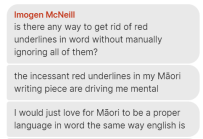
Serendipitously, later that day my daughter reached out to me with some frustrations whilst writing a paper for her te reo Māori course at the University of Otago:

One thing led to another and after helping her solve the problem she had, I asked her if she would craft a quick guest blog post for me with how she did it and what the outcome was.

Guest Post from Imogen Te Rangimarie

Kia ora koutou,

As a university student studying some Te Reo Māori, I’ve learned a lot in the past year or so. Te Reo is a beautiful language and it’s particularly lovely to listen to. Less beautiful, however, is reading a Word doc in Te Reo that’s full of ugly red squiggles. Such was my complaint while completing a written assignment in Te Reo – though I’m very much still learning and making mistakes in the process, I was pretty certain that I hadn’t made as many as can be glimpsed below:

The Māori keyboard that enabled me to write in macrons did nothing to address the perceived spelling mistakes. I lamented this to Sam McNeill [editor’s note: Dad!], who sent me a link to a Microsoft support page: Add an editing or authoring language or set language preferences in Office (microsoft.com).

The instructions were as follows:

It turns out that Māori does, in fact, have proofing available, and so I followed the above instructions. It did take me a minute to find the Option tab, which is right down at the very bottom. From there, I was off. I selected Māori, and clicked on where it said Proofing available. It took a minute to download and install – my computer discovered other Office updates it wanted to do first – but the options screen ended up looking like this.

Observe how in the settings, it now says that Māori has proofing installed. It is possible to then set Māori as your default language if that’s what you mainly do your writing in, by clicking on the Māori row and then clicking Set as Preference. This requires a restart of Word but is then almost ready to go.

I say almost, because I was initially dismayed to discover that the 800-odd words of my assignment were still full of red underlines – clearly it didn’t automatically apply to previously-written text. To get around this without retyping the document, I cut and then pasted without keeping source formatting. Lo and behold, gone were the red lines for all but a few unusual names, as you can see below:

The next thing I discovered was that the benefits went beyond the page being much easier on the eyes – the proofreading actually worked. (That is, it worked as far as I could tell; it may be that there are more complex aspects of Māori that it struggles with). Observe the underline in the example sentence below:

Not only has Word correctly recognised that ‘nga’ is not the right spelling, but it even prompts a correction upon right-clicking, as below:

In my opinion, this is pretty fantastic! If we’re looking to normalise the use of Te Reo while out and about in the world, it’s incredibly useful to be able to write documents in Te Reo Māori without having to backspace and retype every particle i after it autocorrects to a capital I. I’m stoked that the process for installing Māori as a proofing language was straightforward, and Mahuru Māori seems an excellent time to have discovered it.

Categories
Microsoft365 Minecraft:EE

Ngā Motu – A Story Of Whanaungatanga (Connectedness)

kanohi ki te kanohi


Pa settlement bird eye
The Pā settlement inside Ngā Motu

The quote above means ‘face to face, in person, in the flesh’ and therefore it might seem a strange choice to start a blog post about a computer game, nevertheless it is of central importance in the genesis of Ngā Motu.

Just over 12 months ago I had a māramatanga (brainwave, big idea): how could we leverage Minecraft: Education Edition, a hugely popular platform that was available to all ākonga (students) in State and State-Integrated schools in Aotearoa (New Zealand) to promote:

  • Te Ao Māori – the Māori world
  • Te Reo Māori – the Māori language
  • Tikanga – the procedures, protocols and customs of Māori

In many ways it was an ambitious idea for any number of reasons and yet here we are in Te Wiki O Te Reo Māori 2019 launching Ngā Motu to the world through this incredible video:

Starting At The Beginning:

It was mid 2018 and after the initial surge of excitement about my māramatanga for leveraging Minecraft: Education Edition to build something distinctively Kiwi, I was trying to find the right partner who could actually build out this grand vision. It was at this stage that my long time Te Reo Twitter buddy Te Mihinga Komene suggested I reach out to someone called Whetu Paitai and inquire about his previous work on the Minecraft: Java Edition platform he had called Mahi Maina (a sort of transliteration of Minecraft, Mahi meaning ‘to work’ and Maina meaning ‘mining’).

Before continuing the narrative, however, and in keeping with the theme of connectedness / whanaungatanga and the importance of face to face meetings to Māori, it’s worth showing the quote behind Te Mihinga’s Twitter account to reinforce this:

Screenshot 2019-09-07 at 11.03.12.png

My language connects me

My family grounds me

My culture defines me

It is this type of mindset and deep seated belief that has been a constant throughout the last 12 months of working towards delivering Ngā Motu to the world. Ironically, however, in the absence of any direct contact details and only a few sketchy search results on FaceBook hinting at the existence of Mahi Maina, I resorted to messaging Whetu on LinkedIn – hardly an auspicious start!

Screenshot 2019-09-07 at 10.20.06

As the screenshot shows, a virtual connection was made, and our joint hīkoi (journey) began.

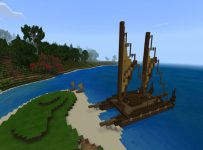
Students start their exploration of Ngā Motu on the waka hourua – the double hulled canoe – it’s a fitting metaphor for the hīkoi (journey) we’ve been on to deliver this Minecraft world over the last 12 months

Building Whanaungatanga (Connectedness)

Whanaungatanga: a relationship through shared experiences and working together which provides people with a sense of belonging.

After the initial connection on LinkedIn, Whetu and I had a number of phone calls where I became ever more excited about his knowledge, skills and experience in both Minecraft and Te Ao Māori. This led to Anne Taylor (Education Lead for Microsoft NZ) meeting kanohi ki te kanohi (face to face) with Whetu near his home in the beautiful Coromandel area of New Zealand. I then had a chance to connect in person with Whetu and three of his tamariki (children) when he visited the Microsoft Auckland office in December 2018. With a hongi (pressing of noses together) on greeting, Whetu and I were ready to get into the nuts and bolts of what we were really trying to create together.

We were united in our tūruapō (vision) to use this platform to promote te reo Māori (the Māori language) something that even the best intentioned kaiako (teachers) sometimes find challenging, especially around the correct pronunciation of Māori words. At the time, I could never have imagined how cleverly Whetu would utilize his deep understanding of the Minecraft platform to build out a series of lessons that harnessed the innate game play of Minecraft to teach students the fundamentals of te reo Māori.

Whakataukī (Proverbs, wisdom) form an important part of Māoritanga (Māori culture) and I love them because many combine vivid imagery with sage advice. It was at this meeting in December that a pathway of co-operation was forged that ultimately has led to the release of Ngā Motu this week. The following whakataukī is therefore appropriate:

Ko koe ki tēnā, ko ahau ki tēnei kīwai o te kete

You at that and I at this handle of the basket

The meaning is clear: when we both carry one handle of the basket, we share the load and can achieve more together than we may have done separately. Whetu, and his company Piki Studios, along with Anne and myself representing Microsoft, shared the vision and mahi (work) to bring Ngā Motu to completion.

The Momentum Grows

With the idea starting to take serious shape, others began to hear about the idea and lend their support. In particular, the incredibly passionate Minecraft: Education Edition team from Microsoft Corp in Seattle. This culminated in Deirdre Quarnstrom and Sara Cornish flying down to Wellington, New Zealand to connect with Marianne Malmstrom and Simon McAtamney from Newlands Intermediate School to film a hack mini that Marianne was running as a holiday programme, and where Whetu Paitai would debut Ngā Motu to students for the first time as a closed beta testing release. As the tweets show, it was very well received:

https://twitter.com/s_nish/status/1151657448203096064?s=20

As I reflect on the diverse range of people involved in the Ngā Motu project, I truly believe it is the vibrancy and power of Māoritanga that has drawn them into this project and the passion for the taonga (treasure) that is te reo Māori (the language) that many New Zealanders like Whetu and the incredible teachers at Newlands Intermediate demonstrate. To be able to see this rich culture visibly emerge as distinctively Māori through Minecraft and the work of Piki Studios made everyone involved incredibly proud:

The mythical, the extinct and the present all co-exist inside of Ngā Motu. Top left to right: a taniwha (water spirit / guardian), the kiwi bird (national bird of New Zealand), inside a wharenui (meeting house), a moa (extinct, flightless bird)

Ngā Motu – A Koha (gift) To Ākonga (students) Everywhere

This week of Te Wiki O Te Reo Māori (Māori Language Week) sees the official launch of Ngā Motu.

Access Lessons & World Here

It is something that everyone involved is incredibly proud of and involves the following resources:

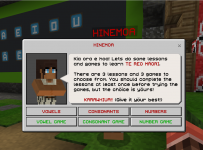
As you can see from the above screenshots, there is much to explore inside of Ngā Motu and I can’t wait to hear the clever ways students and educators adapt the world to various learning outcomes. There are three main structured lessons inside the world that teach students:

  • Māori Vowel Sounds
  • Māori Consonant Sounds
  • Māori Numbers

Realistically, however, there are infinite ways Ngā Motu can be used to teach any number of concepts. I hope to update this post in the future with new ideas and also how the world itself evolves in future iterations.

Final Thoughts:

I am incredibly proud to have been able to contribute to this project in various ways, thrilled by the new relationships it has introduced me to and excited for the possibilities that Ngā Motu will be used by educators in both Aotearoa (New Zealand) and beyond.

Seeing the collective reactions of people to this world during the development and pre-release stages has been humbling – everyone loves the work Whetu has contributed to this project.

I am going to finish this blog post with a final whakataukī (proverb):

Takoto kau ana te whānau a Tāne

The children of Tāne lie prone

This proverb means that once the trees are cleared away, the work is done: it applies to any work that is now completed (in Māori mythology, the forest trees are the children of Tāne).

With Ngā Motu now finished and released as a koha (gift) to the global education community the hīkoi (journey) may be drawing to a close, but the whanaungatanga (relationships and connectedness) will endure.

Categories
Minecraft:EE Windows 11

Introducing Ngā Motu – Minecraft: Education Edition Training Series

Otako Kaufusi from the Microsoft New Zealand Education team is taking to the road with a new series on how to use Minecraft: Education Edition in your classroom. This series, that will cover many areas of New Zealand, is also going to introduce the soon-to-be-launched Ngā Motu world: a uniquely Aotearoa world inside of Minecraft. This world will be officially launched during Te Wiki O Te Reo Māori (week of 9th September) but you can see some early screenshots below:

If you are keen to get some training on how to integrate Minecraft:EE into your teaching and learning programs as well as get guided support for Ngā Motu then consider coming along to one of the sessions closest to you.

Note: you do need to register your attendance using the links below. All sessions will run 4-6pm on the specified date.

  • Northland
  • Auckland South
    • 18th September
    • Host: Opaheke Primary School
    • Address: Tasman Dr, Opaheke, Papakura 2113, New Zealand
    • Registration Link: aka.ms/sakl-nzminecraftedu
  • Auckland Central
    • 18th September
    • Host: Freemans Bay School
    • Address: 95 Wellington St, Freemans Bay, Auckland 1011, New Zealand
    • Registration Link: aka.ms/cakl-nzminecraftedu
  • Auckland South East
    • 19th September
    • Host: Elim Christian School
    • Address: 159 Botany Rd, Botany Downs, Auckland 2010, New Zealand
    • Registration Link: aka.ms/eakl-nzminecraftedu
  • Napier
    • 23rd September
    • Host: Napier Boys’ High School
    • Address: Chambers St, Te Awa, Napier 4110, New Zealand
    • Registration Link: aka.ms/napier-nzminecraftedu
  • New Plymouth
    • 24th September
    • Host: Sacred Heart Girls’ College
    • Address: 9 Pukaka St, Strandon, New Plymouth 4312, New Zealand
    • Registration Link: aka.ms/np-nzminecraftedu
  • Palmerston North
    • 25th September
    • Host: Palmerston North Boys’ High School
    • Address: 263 Featherston St, Palmerston North, 4442, New Zealand
    • Registration Link: aka.ms/pn-nzminecraftedu
  • Wellington
    • 24th October
    • Host: Queen Margaret College
    • Address: 53 Hobson St, Thorndon, Wellington 6011, New Zealand
    • Registration Link: aka.ms/wlg-nzminecraftedu
  • Nelson
    • 7th November
    • Host: Richmond Primary School
    • Address: 14 Cambridge St, Richmond 7020, New Zealand
    • Registration Link: aka.ms/nelson-nzminecraftedu
  • Christchurch
    • 12th November
    • Host: St Andrew’s College
    • Address: 347 Papanui Road, Strowan, Christchurch 8052, New Zealand
    • Registration Link: aka.ms/chch-nzminecraftedu
  • Southland
    • 14th November
    • Host: James Hargest High School
    • Address: 288 Layard St, Hargest, Invercargill 9810, New Zealand
    • Registration Link: aka.ms/southland-nzminecraftedu

New To Minecraft: Education Edition?

If you’ve never tried Minecraft:EE then I suggest you read by ultimate guide to getting started:

The Ultimate Minecraft:EE Getting Started Guide

Of course, there are heaps of links and content on the main website too here and I’ve got other blog posts about Minecraft:EE here too.

We hope to see you at some of the events above.


The Kuia Cloud – Musings On Te Reo

Maori Language WeekThis week Aotearoa New Zealand celebrates Te Wiki o Te Reo Māori or Māori Language Week. This is an important cultural week for all New Zealanders as we collectively work towards preserving the taonga (treasure) that is our native language. If you’re wondering about the relevance of my blog post as “The Kuia Cloud”, please do persevere and keep reading as it will become evident (kuia is Māori for elderly woman or grandmother). As an added word association, Aotearoa literally means “land of the long white cloud” so we are perfectly situated to build out a Granny/Kuia Cloud!

In my previous role, I helped organise a Digital Treasure Hunt for students to encourage them to kōrero Māori (speak the Māori language) and after visiting the beautiful Orakei Marae last week with the Microsoft kia rite kick off, my mind has been whirring again around the importance of promoting Te Reo. I admit that this has a personal interest too, with my oldest daughter having now competed twice in the Ngā Manu Kōrero speech competition (you can read her 2017 speech here) and she has expressed a desire to progress her Reo competency so she can become more fluent.

The challenge is, her current secondary school does not offer any tuition in Te Reo and I’ve been using my wider Professional Learning Network to explore options to support her (and to some extent me!) in learning more of the Māori language. It was all of this triggered some long dormant memories of mine about the work of Sugata Mitra and his “hole in the wall” project in New Delhi. If you’re unfamiliar with this, then this summary is a good read, but the key part is as follows:

In early 1999, some colleagues and I sunk a computer into the opening of a wall near our office in Kalkaji, New Delhi. The area was located in an expansive slum, with desperately poor people struggling to survive. The screen was visible from the street, and the PC was available to anyone who passed by. The computer had online access and a number of programs that could be used, but no instructions were given for its use.

What happened next astonished us. Children came running out of the nearest slum and glued themselves to the computer. They couldn’t get enough. They began to click and explore. They began to learn how to use this strange thing. A few hours later, a visibly surprised Vivek said the children were actually surfing the Web.

The findings from this “experiment” led to Mitra delivering an award winning TED talk about his thoughts on the future of learning and his views that students directing their own learning was a critical pathway forward in education. He promoted this with his idea of Schools In The Cloud – have a watch of the following TED talk to learn more:

The extension of Schools In The Cloud was “The Granny Cloud.” Mitra quickly realised that for the illiterate children of the slums of New Delhi, without English even their best learning through playing/experimenting with a computer would inherently be limited if they did not understand the global language of English. To remedy this, he started to build out “The Granny Cloud”, the idea being that retired people (often grandmothers) would give up their time on Skype to simply have conversations with these children and through practicing spoken conversational English, they would improve their opportunities in life.

So far, so good.

The Kuia Cloud

kingi
Kingi Tawhiao Potatau te Wherowhero Credit.
So I’m wondering aloud whether something as simple as building a Granny Cloud could be replicated in New Zealand, this time using the kuia (elderly woman) and koro (elderly man) to be the support network for people of any age wishing to learn how to kōrero Māori. Undoubtedly the internet is shrinking our world and being able to connect more or less instantaneously to speakers of the Māori language significantly reduces the barriers to entry for learning the language. My daughter wrapped her Ngā Manu Kōrero speech around the following whakatauki (proverb)

ki te kāhore he whakakitenga ka ngaro te iwi (without foresight or vision the people will be lost)

Further on in her speech she talked about the challenges faced in New Zealand over the years with declining numbers of people able to speak Te Reo:

Another major period of Māori history when this whakatauākī, without foresight or vision the people will be lost, was highly applicable was in the 1980s, when it became widely recognised that Te Reo Māori was dying out. Yes, dying out. Prior to this, there had been years of Te Reo being banned in schools and Māori children being punished for speaking it, which in turn led to some parents not teaching their children Māori because they didn’t want their children suffering at school the way they did. If this had continued, who knows how close Te Reo could have come to extinction- it might have even happened, but for a few groups of individuals who were in possession of some foresight. Two initiatives that began in the 1980s to try and revive Te Reo Māori were the Kohanga Reo movement and the Kura Kaupapa.

It would seem to me that perhaps a further opportunity exists now to couple Technology and Te Reo together and build out a “Kuia Cloud” – a network of volunteers who would be willing to give up some of their time to kōrero Māorwith those interested in learning more of the language. In doing so, this would demonstrate the foresight and vision that Kingi Tawhiao Potatau te Wherowhero talked about in the mid 1800s and further help preserve this taonga which is absolutely unique to Aotearoa (New Zealand).

I am not sure where to go from here with this idea, although two things do come to mind:

  1. Share this idea and blog post as widely as I can, starting with the #TeReo hashtag on Twitter where incredible educators like Te Mihinga Komene regularly support people with their questions around Te Reo Māori
  2. See if there is anything that the company I work for (Microsoft NZ) can do to help build a network or provide the technology to make this happen. Skype is a Microsoft product and there are a few different versions of this service, and Microsoft NZ has long worked with and supported Dr Te Taka Keegan to add more Te Reo into Microsoft products.
    1. One idea could be creating a Microsoft Team that could host the Kuia / Koro Cloud as this would allow additional resources to be utilized (although it would need to wait until the feature of adding External Users is available).

Conclusion:

If you’re reading this during Te Wiki O Te Reo Māori 2017  (or even afterwards) and would like to be involved in some capacity, feel free to reach out to me. The three easiest ways would be:

  1. Drop a comment in the area below – I’d love to hear from you!
  2. Ping me on Twitter – @samuelmcneill
  3. Connect with me on LinkedIn – my profile direct link is here

Much like the revival of ANZAC Day dawn service attendance from people across all generations, there is a growing number of younger people who are keen to learn Te Reo Māori. Just possibly, through the application of foresight and vision, along with a healthy dose of technology, we can connect these eager students with those that would be only too eager to pass on their aroha (love) for Te Reo Māori.