When I first quit my career in ICT, I re-trained as a secondary school teacher and primarily taught History (with some English Literature and Religious Education on the side). We covered many historical topics including one unit called “The Origins of WW2”, in which students were amazed to find that the seeds of that conflict were sown at the conclusion of WW1 and the signing of the Treaty of Versailles. I’ve also blogged about ANZAC memorial observances here and here.
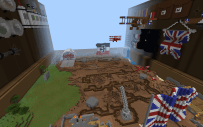
This weekend I noted that the Minecraft: Education Edition team have been busy and released a series of lessons to assist educators and students examine key elements of WW1, the so-called “war to end all wars”.
Four of the five lessons released covering WW1
The five lessons included in this series are:
Lesson 1: Explore how WWI was different from the conflicts that came before it, and discover what led to it starting.
Lesson 2: Find out how Morse Code was used as a vital form of communication, and create and send a telegraph using the code.
Lesson 3: Explore how flight changed the face of warfare, and build your own plane.
Lesson 4: Learn about the difficulties and dangers of Trench Warfare, the horrific conditions soldiers had to life and fight in, on both sides.
Lesson 5: Reflect on the lessons learned from the war, focusing on the importance of remembrance
My Thoughts
This is a brilliant, accessible resource for educators to teach major themes to students through a high interest topic and the engaging platform of Minecraft: Education Edition. In fact, the incredible Auckland War Memorial Museum (my personal favourite musuem in New Zealand) previously released a Minecraft world around the legendary Gallipoli Campaign that forged the ANZAC brotherhood between Australia and New Zealand armed services:
You can access the Gallipoli learning activities here (please note: as these were released in 2015 it was prior to the launch of Minecraft: Education Edition and so will not play in that version of the app).
Through studying these world-changing conflicts, students learn not to glorify the violence, but instead understand the contributing factors that led to the escalation of tensions and ultimately, the outbreak of war. Furthermore, they gain a greater appreciation for the horrific experiences the soldiers found themselves in and the long-term impact this had on their lives.
As much of the world, including New Zealand where I live, remains in some level of lockdown due to the #COVID19 virus, reflecting on the bravery and resilience of our forefathers can be encouraging and a reminder that things always get better and return to some form of normal.
This, Too, Shall Pass
The phrase “this, too, shall pass” has that distinctive ring that makes you think you’ve heard it somewhere before, but perhaps can’t quite place its origin. It’s a phrase I’ve been reflecting on over recent months as we all adjust to some form of “new normal.”
In 1859 a young Republican politician, and future President, Abraham Lincoln referenced this narrative recognizing the uniquely applicable elements of this phrase to promote humility during a time of success and comfort in a time of difficulty:
It is said an Eastern monarch once charged his wise men to invent him a sentence, to be ever in view, and which should be true and appropriate in all times and situations. They presented him the words: “And this, too, shall pass away.” How much it expresses! How chastening in the hour of pride! How consoling in the depths of affliction! (Source)
I’m certain that innumerable generations have repeated some version of this mantra as a source of hope and inspiration that things will improve. Undoubtedly, during the long years of brutal and unrelenting conflict throughout World War 1 and World War 2, both soldiers far from home and their loved ones who remained behind looked forward with heightened anticipation to the day when that conflict would pass and a return to normalcy would ensue.
The Birth Of An ANZAC Spirit
The NZ History website is a great resource for getting an easy access point into topics like these, so I do encourage you to check it out if you want to learn more about ANZAC Day.
I’ve previously taught History and Social Studies where this topic is explored in depth, linking the emergence of a unique identity, forged through the hardship of battle, for New Zealand and Australia and recognized now as the ANZAC Spirit. These have become firmly established in the annals of nation building lore in both countries.
Nowadays, ANZAC references abound: from biscuits to trans-Tasman sporting rivalries, helping to keep these foundational ideas alive. Notions of how two small British Dominions formerly known off-handedly as the Antipodes and where most residents saw themselves as “British”, emerged as uniquely and distinctively Australian and New Zealander, coming together through shared experience of conflict, forming a brotherhood to be forever known as ANZAC.
Lest We Forget
It is with a sense of pride and historical appreciation that I’ve observed an increasing respect and reverence for the Annual ANZAC Day commemorations. Having travelled to America numerous times and seen first hand the respect and honour provided to members of the US Armed Forces by their fellow citizens, along with the emphasis on Memorial Day, it’s pleasing to see New Zealand developing a similar passion.
With #COVID19 Lockdown in full swing, I’ve been limited to walks around the block but was thrilled to see this beautiful fence on a very misty morning this week:
Even my own children have got in on this.
My eldest, in her final year of high school, was asked to give the ANZAC Address at her school this year. Unfortunately due to #COVID19 lockdown the service could not proceed, however multiple people contributed to creating an online version which can be viewed below (her speech starts at the 6:28minute mark):
Touching on themes of freedom and sacrifice, along with conviction of thought and action, her message acknowledges the high cost of war through the experiences of both her great-grandfathers in World War 2 and issues a challenge to us today: what will we do with that freedom, purchased at so high a cost?
My other children, with school happening remotely and online due to #COVID19, have had plenty of spare time on their hands which they have utilized by making ANZAC wreaths and poppies:
As schools, students and the general populace pause to reflect at this time each year, we collectively remember and reinforce the bonds that make us a nation. This year, in 2020, we do so under particularly arduous and unique circumstances due to #COVID19, something many politicians are referring to as “our generation’s battle”.
Without trivializing the ultimate sacrifice that many, many of our forefathers made during the armed conflicts that birthed the ANZAC spirit, it should rightly be recognized that #COVID19 is also causing death and significant economic pain for our small nation.
The second and more deadly wave of a new strain of influenza arrived in New Zealand in October 1918. By the end of the year around 9,000 people across the country had died. Half as many New Zealanders lost their lives in little more than two months than during the entire First World War, and worldwide the pandemic was responsible for at least 50 million deaths.
Consequently, we should approach the current difficulties we face with a healthy dose of historical context, recognizing that whilst we suffer, our forebears have seen this – and far worse. Nevertheless, we can be united in wishing that:
This, too, shall pass
Lest we forget.
Postscript
If you enjoy this sort of thing, you may be interested in the two recordings I made below – delivered as Chapel presentations when I was still working at St Andrew’s College. They are the product of many hours of research and I blogged about how technology enabled this here, including my personal highlight of first finding, and then being able to connect over Skype, with the 93yr old surviving sister of James Samuel Cartwright.
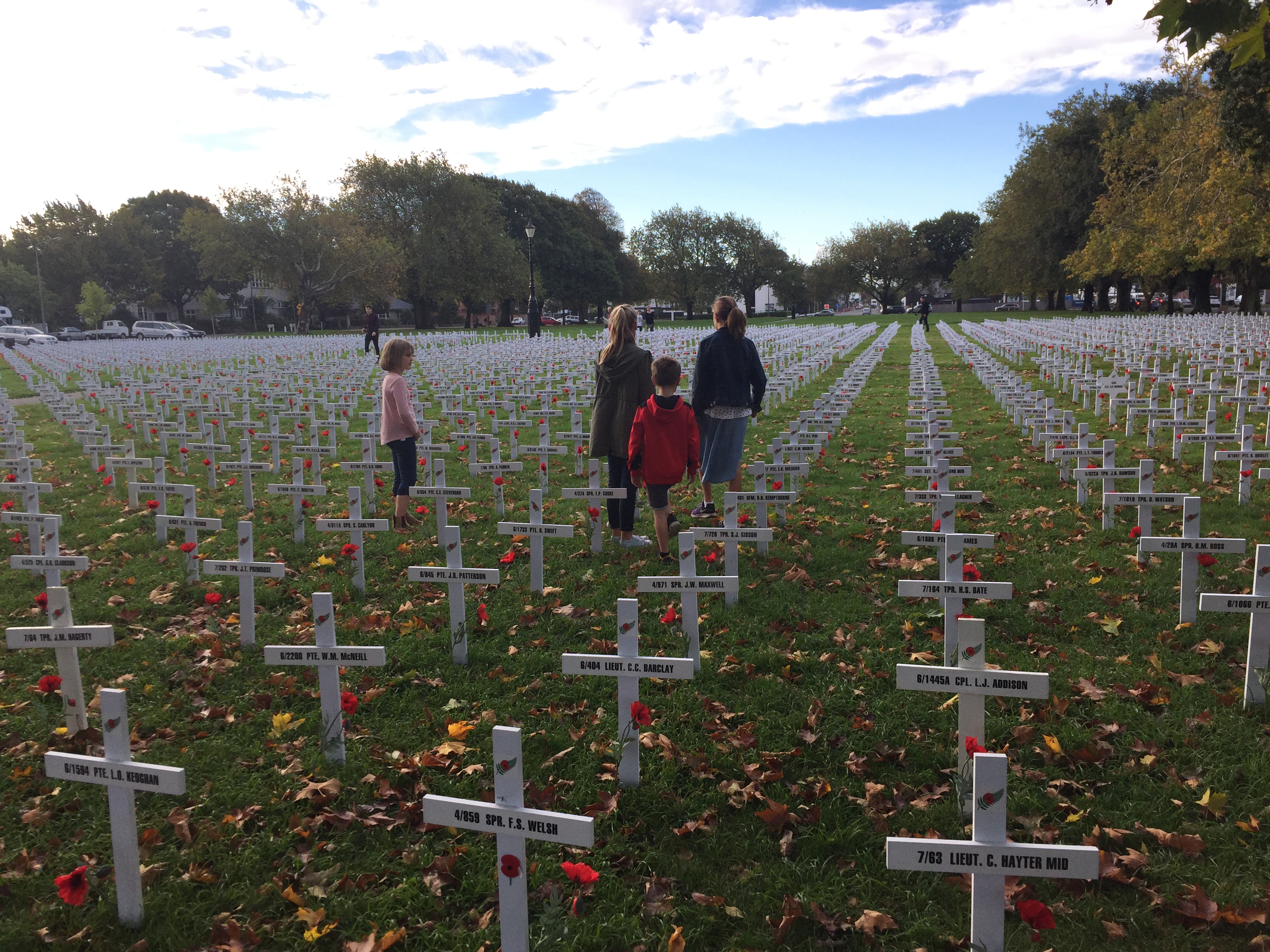
WW1 Memorials in Cranmer Square, Christchurch in the lead up to Anzac Day 2017
It’s not often I write about things other than technology and education on this blog, however one of my other great passions is, in fact, history. I was privileged to teach history for four years at Linwood College and Catholic Cathedral College when I first started teaching after leaving my first career in the ICT sector.
Laying a virtual poppy for Barry Martin at the Auckland War Memorial Museum Online Cenotaph
I was thrilled, therefore, to learn that at the ANZAC Memorial Service that will be hosted at the new St Andrew’s College Centennial Chapel tomorrow, a video will be shown of the College’s World War 2 Memorial Tour of Europe that happened in January. During this trip, each student was required to research about an Old Collegian and then a wreath and College thistle was placed at the grave site. You can see the video showing this tour here:
Keen observers will have heard two names mentioned:
James Samuel Cartwright – a former teacher who was killed days after the D-Day landings when his destroyer, HMS Boadicea, was torpedoed and sunk in the English Channel
Barry Martin – a student of the Preparatory College who was a navigator in Stirling Bombers and was shot down and killed over occupied Europe (his plane crashed near Rotterdam).
These names were two of the men that I had researched whilst at St Andrew’s College and shared their stories at Chapel services. At the time, I wrote a blog post showing off the considerable technology that went into researching and presenting these stories, including a Skype video call with the 92year old surviving sister of James Samuel Cartwright.
It seems appropriate at this time of ANZAC commemorations to revisit these presentations and, through the retelling of their stores, we will not forget the ultimate sacrifice these men made.
James Samuel Cartwright:
Barry Martin:
Technology is certainly enabling new generations to learn more about their forefathers’ service in both The Great War and World War 2 and it seems the fascination with new stories from this period are not diminishing. I read with interest this story in the press today, this story in the press today, bringing a degree of closure to a 93 year old Kiwi who piloted Lancaster bombers during the WW2. A great resource for New Zealander’s looking to find out more about relatives that have served (as far back as the Boer War), is the Auckland Museum’s Online Cenotaph:
The Online Cenotaph allows visitors to search up known information on former soldiers, contribute additional information if they have it, as well as lay a “virtual poppy” on the cenotaph.
For those interested, I have read the following history books over the last few months – they may be of interest to you as you pause and reflect this ANZAC Day: